
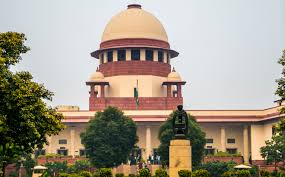
Introduction
The question of whether privacy constitutes a fundamental right in India remained contested for over six decades until the Supreme Court delivered its historic verdict in Justice K.S. Puttaswamy (Retd.) v. Union of India on August 24, 2017. This landmark decision, rendered by a nine-judge bench, unequivocally established that the right to privacy is protected as a fundamental right under Articles 14, 19 and 21 of the Constitution of India. The judgment marked a watershed moment in Indian constitutional jurisprudence, fundamentally transforming the relationship between citizens and the state in an increasingly digitized world.
The significance of the Puttaswamy case extends far beyond its immediate legal implications. It represents a judicial recognition that privacy is not merely a privilege of the elite but an inalienable right inherent to human dignity and personal autonomy. In a nation of over 1.4 billion people rapidly embracing digital technologies, this constitutional safeguard has emerged as a critical bulwark against potential state overreach and corporate data exploitation.
Historical Context and the Evolution of Privacy Jurisprudence in India
To fully appreciate the significance of the Puttaswamy judgment, one must understand the historical trajectory of privacy jurisprudence in India. The doctrine of privacy in Indian constitutional law evolved through a series of judicial pronouncements, marked by both progress and regression.
The Early Denial: M.P. Sharma and Kharak Singh
The foundation of privacy jurisprudence in India rested on what many scholars have termed a trilogy of decisions, beginning with M.P. Sharma v. Satish Chandra (1954). In this case, an eight-judge bench of the Supreme Court examined whether search and seizure violated fundamental rights. The bench held that the drafters of the Constitution did not intend to subject the power of search and seizure to a fundamental right of privacy. The court reasoned that unlike the Fourth Amendment of the United States Constitution, the Indian Constitution contained no explicit language protecting privacy, and therefore no such right could be read into the constitutional framework.
This restrictive interpretation was further reinforced in Kharak Singh v. State of Uttar Pradesh (1963). The case arose when police surveillance measures were challenged as violations of fundamental rights. The six-judge bench held that domiciliary visits at night was unconstitutional, but upheld the rest of the Regulations. More importantly, the bench held that the right of privacy is not a guaranteed right under the Constitution. The judgment thus presented an internal contradiction: while striking down night-time home visits on grounds that implicitly recognized privacy concerns, it simultaneously declared that privacy was not constitutionally protected.
Recognition Through Incremental Steps
Despite these early setbacks, subsequent judicial decisions gradually moved toward recognizing privacy as a constitutional value. In Govind v. State of Madhya Pradesh (1975), the Supreme Court introduced the concept of a compelling state interest test, borrowed from American jurisprudence, suggesting that individual privacy interests could sometimes outweigh state concerns. Later decisions, including R. Rajagopal v. State of Tamil Nadu (1994) and People’s Union for Civil Liberties v. Union of India (1997), increasingly acknowledged privacy as integral to Article 21’s protection of life and personal liberty.
However, these pronouncements created legal uncertainty. While smaller benches recognized privacy as fundamental, the larger bench decisions in M.P. Sharma and Kharak Singh technically remained binding precedent. This doctrinal confusion necessitated authoritative resolution by a bench of sufficient strength to overrule the earlier decisions.
The Aadhaar Scheme and the Genesis of Puttaswamy
The immediate catalyst for the Puttaswamy case was the government’s implementation of the Aadhaar scheme, launched in 2009 by the Unique Identification Authority of India (UIDAI). Aadhaar aimed to provide every Indian resident with a unique 12-digit identification number linked to biometric data including fingerprints and iris scans. While the government promoted Aadhaar as a tool for efficient welfare delivery and subsidy distribution, civil society organizations and privacy advocates expressed grave concerns about mass surveillance, data security, and potential misuse of personal information.
Justice K.S. Puttaswamy, a retired judge of the Karnataka High Court, filed a writ petition in 2012 challenging the constitutional validity of the Aadhaar scheme. His petition argued that the mandatory collection of biometric data violated the fundamental right to privacy. When the matter came before a three-judge bench, the Attorney General argued on behalf of the Union of India that the Indian Constitution does not grant specific protection for the right to privacy.
The three-judge bench recognized the need for larger bench consideration given the conflicting precedents. On August 11th 2015, a Bench of three judges passed an order that a Bench of appropriate strength must examine the correctness of the decisions in M P Sharma v Satish Chandra and Kharak Singh. Eventually, the matter was referred to a nine-judge bench, the largest since independence to consider a fundamental rights question, comprising Chief Justice J.S. Khehar and Justices J. Chelameswar, S.A. Bobde, R.K. Agrawal, R.F. Nariman, A.M. Sapre, D.Y. Chandrachud, S.K. Kaul, and S.A. Nazeer.
The Puttaswamy Judgment: Key Holdings and Reasoning
Unanimous Recognition of Privacy as Fundamental Right
Following extensive arguments that concluded on August 2, 2017, the nine-judge bench delivered its unanimous verdict on August 24, 2017. Although all judges concurred in the outcome, they authored six separate opinions, reflecting the complexity and multifaceted nature of privacy as a constitutional value.
The lead judgment, authored by Justice D.Y. Chandrachud and signed by Chief Justice Khehar and Justices R.K. Agrawal and Abdul Nazeer, provided the most comprehensive analysis. The Court affirmed that life and personal liberty are inalienable rights, inseparable from a dignified human existence. The judgment emphasized that every individual irrespective of social or economic status is entitled to the intimacy and autonomy which privacy protects.
Overruling Previous Precedents
The Puttaswamy judgment explicitly overruled the portions of M.P. Sharma and Kharak Singh that denied constitutional protection to privacy. The judgment in M P Sharma holds essentially that in the absence of a provision similar to the Fourth Amendment, the right to privacy cannot be read into the provisions of Article 20 (3). The court clarified that M.P. Sharma’s narrow interpretation was incorrect because the absence of an express constitutional guarantee of privacy still begs the question whether privacy is an element of liberty and, as an integral part of human dignity, is comprehended within the protection of life as well.
Similarly, regarding Kharak Singh, the court noted that while the decision correctly recognized that life under Article 21 means more than mere animal existence, it suffered from an internal inconsistency. Where on the one hand the regulation permitting domiciliary visits was struck down on the rationale of privacy without expressly using the term, on the other it recorded the absence of constitutional protection of privacy. These two contradicting views cannot co-exist.
Constitutional Foundations of Privacy
The judgment located the right to privacy within multiple constitutional provisions. The Court observed that the right to privacy is primarily derived from Article 21. However, it is also supplemented by the values enshrined in other fundamental rights. Article 21 guarantees the right to life and personal liberty, and the court interpreted this broadly to encompass privacy as intrinsic to meaningful existence. Additionally, the judgment found privacy implicit in Article 14’s guarantee of equality and Article 19’s protection of fundamental freedoms including speech, association, and movement.
This multi-constitutional foundation gave privacy a robust legal grounding. The right to privacy is inextricably bound up with all exercises of human liberty, both as it is specifically enumerated across Part III, and as it is guaranteed in the residue under Article 21.
Privacy as Natural and Inalienable Right
Beyond constitutional analysis, the judgment recognized privacy as a natural right. Privacy being intimately connected to dignity and autonomy eminently qualifies as a natural, inalienable right. It must be elevated to the status of a fundamental right and granted constitutional protection irrespective of whether it is legal or common law right. This natural law foundation meant that privacy was not created by the Constitution but merely recognized and protected by it.
The Court acknowledged that certain rights are not bestowed by the State but are inhered by a person by virtue of being human. All individuals have natural rights, irrespective of their class, economic status, gender or sexual orientation. This universalist approach ensured that privacy protections extended to all persons equally.
Dimensions and Scope of the Right to Privacy
The Puttaswamy judgment recognized that privacy is not monolithic but encompasses multiple dimensions. While not providing an exhaustive list, the court identified several core aspects:
Bodily Integrity and Personal Autonomy
The judgment emphasized that the right to privacy safeguards one’s freedom to make personal choices and control significant aspects of their life. Personal intimacies including sexual orientation are at the core of an individual’s dignity. This dimension protects individuals from physical intrusions and affirms their right to make intimate personal decisions without state interference.
Informational Privacy
In the digital age, informational privacy has become increasingly critical. The Court noted that the collection of information about a person gives power over them. This aspect of privacy protects individuals’ control over their personal data and how it is collected, used, and shared by both state and non-state actors.
Decisional Autonomy
Privacy protects the freedom to make choices about one’s life course without unwarranted interference. This includes decisions about relationships, family planning, career choices, and other matters central to individual self-determination.
Spatial Privacy
The sanctity of private spaces, particularly the home, represents a fundamental privacy concern. The judgment reaffirmed that individuals have a right to maintain zones of privacy free from arbitrary intrusion.
The Three-Pronged Test for Permissible Restrictions
Recognizing that no fundamental right is absolute, the Puttaswamy judgment established a three-pronged test for evaluating when state action may legitimately infringe upon privacy. The right may be restricted only by state action that passes each of the three tests: First, such state action must have a legislative mandate; Second, it must be pursuing a legitimate state purpose; and Third, it must be proportionate.
Legality
Any restriction on privacy must be anchored in law. The court adopted a liberal interpretation of fundamental rights, holding that individual liberty must extend to digital spaces and individual autonomy, and privacy must be protected. Executive action alone, without legislative sanction, cannot justify privacy infringement.
Legitimate State Aim
The state must demonstrate a legitimate objective for the privacy intrusion. Legitimate state aims would include national security concerns, preventing and investigating crime, and preventing the dissipation of social welfare benefits. Mere administrative convenience or general public interest does not suffice.
Proportionality
Perhaps most significantly, the judgment adopted the principle of proportionality. Such state action, both in its nature and extent, must be necessary in a democratic society and the action ought to be the least intrusive of the available alternatives to accomplish the ends. This requires that any privacy restriction be narrowly tailored to achieve its stated objective with minimal intrusion.
Courts must be guided by the standard of just, fair and reasonable legislation as applicable to Article 21. The strictest scrutiny standard of compelling State interest must be used. This high threshold ensures robust protection against arbitrary state action.
Implications for Marginalized Communities and Social Justice
One of the most progressive aspects of the Puttaswamy judgment was its explicit rejection of the argument that privacy is a privilege of the elite. The Court dismissed the argument that there must be a trade-off between the right to privacy and welfare entitlements provided by the State. It held that there is no substance in the argument that the right to privacy is a privilege for the few.
The court specifically noted that economic status was not a priority over civil and political rights for socio-economically disadvantaged communities. The Court recognised the right of all individuals to privacy, autonomy and intimacy, irrespective of their socio-economic status. This egalitarian vision ensured that privacy protections would benefit all segments of society, not just the privileged classes.
Recognition of LGBTQ+ Rights
The Puttaswamy judgment had profound implications for LGBTQ+ rights in India. This judgement was the first time that the Supreme Court recognised the rights of the LGBT community in India. The judgement included the right to determine the sexual orientation and the right to privacy.
Justice Chandrachud held that the rationale behind the Suresh Koushal (2013) Judgement is incorrect, and the judges clearly expressed their disagreement with it. Justice Kaul agreed that the right to privacy cannot be denied, even if a minuscule fraction of the affected population exists. This recognition laid the groundwork for the subsequent Navtej Singh Johar v. Union of India (2018) decision that decriminalized homosexuality by reading down Section 377 of the Indian Penal Code.
International Human Rights Framework
The judgment also drew upon international human rights instruments to strengthen its reasoning. The Court noted that the right to privacy was guaranteed under Article 12 of the Universal Declaration of Human Rights and Article 21 of the International Covenant on Civil and Political Rights. By aligning Indian constitutional law with global human rights standards, the court demonstrated that privacy is not merely a domestic concern but a universally recognized human right.
Legislative Aftermath: The Journey Toward Data Protection
The Puttaswamy judgment created a constitutional imperative for comprehensive data protection legislation. The verdict introduced under post-Puttaswamy required the state to create an effective data protection regime. This mandate set in motion a lengthy legislative process aimed at translating constitutional principles into statutory protections.
The Justice Srikrishna Committee and Initial Attempts
Soon after the Puttaswamy judgment, the central government established the Justice B.N. Srikrishna Committee to examine data protection concerns and propose a legal framework. In 2018, the committee submitted a comprehensive report along with the draft Personal Data Protection Bill. Its proposals included restrictions on processing and collection of data, Data Protection Authority, right to be forgotten, data localisation, explicit consent requirements for sensitive personal data.
However, the legislative process proved contentious and protracted. Multiple versions of data protection bills were introduced, debated, and modified over subsequent years, reflecting tensions between privacy protection, economic development, and state security interests.
The Digital Personal Data Protection Act, 2023
After years of deliberation, the Digital Personal Data Protection Act (DPDP Act) was finally enacted in August 2023, representing India’s first comprehensive data protection legislation. The Act mandates informed consent for data collection, data minimization and purpose limitation, ensuring that entities collect only necessary data. It imposes hefty penalties up to ₹250 crore for data breaches and establishes a Data Protection Board to oversee compliance.
The DPDP Act incorporates several key features designed to operationalize the Puttaswamy principles:
- Consent Framework: The Act requires free, specific, informed, unconditional, and unambiguous consent from data principals (individuals) before their personal data can be processed. This consent-centric approach aims to give individuals greater control over their information.
- Data Fiduciary Obligations: Entities that determine the purpose and means of data processing (data fiduciaries) must fulfill various obligations including ensuring data accuracy, implementing security safeguards, and enabling data principals to exercise their rights.
- Rights of Data Principals: Individuals are granted rights to access their data, seek corrections, and have grievances addressed, though these rights are more limited than under frameworks like the European Union’s General Data Protection Regulation (GDPR).
- Data Protection Board: The Act establishes a Data Protection Board to monitor compliance and adjudicate disputes, providing an institutional mechanism for enforcement.
Criticisms and Limitations
Despite these positive features, the DPDP Act has faced significant criticism from privacy advocates and legal scholars. The Act grants the government broad exemptions for state security and public order, terms that are vaguely defined and prone to misuse. This undermines the Puttaswamy proportionality test, as state agencies can access personal data without judicial oversight.
Additional concerns include:
- Limited User Control: Unlike the GDPR, which empowers individuals with rights like data portability and erasure, the DPDP Act offers limited user control. The absence of comprehensive user rights diminishes individual autonomy over personal data.
- Independence of Data Protection Board: The Data Protection Board’s government-appointed structure raises concerns about independence, unlike GDPR’s autonomous regulators. Without genuine independence, the Board may be unable to effectively check government overreach.
- Vague Exemptions: The broad and ill-defined exemptions for government agencies create significant loopholes that could swallow the rule. Critics argue that these provisions prioritize state and corporate interests over individual privacy rights.
The DPDP Act realises the right to privacy that exists in the constitution by providing rights to individuals, but its implementation will determine whether it truly fulfills the promise of Puttaswamy or represents a dilution of constitutional protections.
Surveillance, National Security, and the Balance of Interests
One of the most contentious areas in post-Puttaswamy India involves the tension between individual privacy and state surveillance capabilities. The tension between individual privacy and state security is a global challenge, acutely felt in India’s surveillance framework. Programs like the Central Monitoring System and the National Intelligence Grid enable real-time monitoring of communications and financial transactions, often without transparent legal checks.
Government Surveillance Programs
Despite the constitutional recognition of privacy, the government has continued to expand surveillance infrastructure. Government continued to commission and execute mass surveillance programmes with little regard for necessity or proportionality, with justifications always voiced in terms of broad national security talking points.
In December 2018, the Ministry of Home Affairs authorized ten central agencies to intercept, monitor, and decrypt any information on any computer in the country. This expansive surveillance authority, issued without robust safeguards or judicial oversight, raised serious questions about compliance with Puttaswamy’s proportionality requirements.
Similarly, proposals for social media monitoring and various surveillance technologies have proliferated in the post-Puttaswamy era, often justified on national security grounds but lacking the procedural protections and narrow tailoring that the judgment demands.
The Proportionality Deficit
The Puttaswamy judgment requires that such measures meet the proportionality standard, yet vague legislative exemptions weaken accountability. The gap between constitutional principle and administrative practice remains substantial.
Critics argue that surveillance measures must satisfy all three prongs of the Puttaswamy test: they must be anchored in clear law, serve genuinely legitimate state purposes (not mere convenience), and be narrowly tailored with minimal intrusion. Mandatory judicial oversight of surveillance programs would enhance accountability, providing an independent check on executive power.
Balancing Competing Interests
The challenge lies in striking an appropriate balance between security imperatives and individual freedoms. While legitimate security concerns exist, especially in a country facing terrorism and other threats, these cannot justify carte blanche for mass surveillance. A rights-oriented data protection legislation is the need of the hour which includes comprehensive surveillance reform prohibiting mass surveillance and institution of a judicial oversight mechanism for targeted surveillance.
The Puttaswamy framework demands that surveillance be targeted rather than mass-based, subject to meaningful oversight, and limited to genuine threats rather than serving as a tool for general monitoring or political control.
Impact on Subsequent Jurisprudence
The Puttaswamy judgment has served as a foundation for numerous subsequent decisions across diverse legal domains, demonstrating its far-reaching influence on Indian constitutional law.
Decriminalisation of Homosexuality
The most celebrated post-Puttaswamy decision was Navtej Singh Johar v. Union of India (2018), which decriminalized consensual homosexual acts by reading down Section 377 of the Indian Penal Code. By linking privacy to LGBTI issues, this judgment fuelled the fire for the challenge to Section 377. The court explicitly relied on Puttaswamy’s recognition that sexual orientation and intimate personal choices lie at the core of privacy and dignity.
The right to privacy and the protection of sexual orientation lie at the core of the fundamental rights guaranteed by Articles 14, 15, and 21 of the Constitution. Equal protection demands protecting the identity of every individual without discrimination. This historic decision brought India into alignment with global human rights standards and vindicated the dignity of LGBTQ+ individuals.
Decriminalization of Adultery
Similarly, in Joseph Shine v. Union of India (2018), the Supreme Court struck down the criminalization of adultery as unconstitutional. The court reasoned that such laws violated privacy by enabling state intrusion into intimate personal relationships and treating married women as property of their husbands rather than autonomous individuals.
Reproductive Rights
The Puttaswamy framework has also influenced reproductive rights jurisprudence, strengthening women’s autonomy in healthcare decisions. Courts have increasingly recognized that decisions about pregnancy, abortion, and family planning fall within the protected sphere of privacy and personal liberty.
Aadhaar Validity
Importantly, while Puttaswamy established privacy as fundamental, it did not directly address Aadhaar’s constitutionality. That question was resolved in a separate 2018 judgment where a five-judge bench upheld Aadhaar’s validity but imposed significant restrictions. The court struck down provisions allowing private entities to mandate Aadhaar and limited its use to government welfare schemes with legislative backing, applying Puttaswamy’s proportionality analysis.
Comparative Perspectives and Global Significance
The Puttaswamy judgment positioned India within the global community of nations recognizing privacy as a fundamental right. This ruling by the Supreme Court paved the way for India to join the United States, Canada, South Africa, the European Union, and the UK in recognizing this fundamental right.
Alignment with International Standards
By grounding its analysis partly in international human rights law, the court demonstrated that privacy protection is not a Western import but a universal human value. By putting the right to privacy at the heart of constitutional debate in the world’s largest democracy, it is likely to provide assistance and inspiration for privacy campaigners around the world.
Distinctive Features of Indian Approach
While drawing inspiration from international sources, including American Fourth Amendment jurisprudence and European data protection frameworks, the Puttaswamy judgment developed a distinctively Indian constitutional approach. Unlike some jurisdictions where privacy protections emerge from specific constitutional provisions or stand-alone privacy laws, India’s approach integrates privacy across multiple constitutional guarantees, creating a more comprehensive protective framework.
The natural law foundation of privacy in Puttaswamy also distinguishes the Indian approach. By recognizing privacy as pre-constitutional and inalienable, the court elevated it beyond the reach of ordinary legislative amendment, providing particularly robust protection.
Challenges and the Path Forward
Despite the transformative potential of Puttaswamy, significant challenges remain in translating constitutional principle into lived reality.
Implementation Gaps
The judgment in K.S. Puttaswamy effected little change in the government’s thinking or practice as it related to privacy and the personal data of its citizens. Years after the judgment, surveillance practices continue with minimal accountability, data breaches occur regularly, and many government programs collect extensive personal information without adequate safeguards.
Need for Institutional Reforms
Establishing an independent Data Protection Board, insulated from government influence, is critical for impartial enforcement. Beyond the Data Protection Board, comprehensive reforms are needed across the institutional landscape including stronger parliamentary oversight, judicial remedies for privacy violations, and whistleblower protections for those exposing surveillance abuses.
Technological Challenges
The rapid evolution of technology continually presents new privacy challenges. Artificial intelligence, facial recognition systems, the Internet of Things, and other emerging technologies create unprecedented possibilities for both beneficial innovation and privacy intrusion. Ensuring that Puttaswamy’s framework remains relevant requires ongoing adaptation.
Introducing user-centric rights like data erasure and portability would empower citizens, aligning the DPDP Act with global standards. Beyond specific rights, broader technological literacy and public awareness are essential to enable individuals to meaningfully exercise their privacy rights.
Cultural and Social Factors
Privacy consciousness varies widely across Indian society, influenced by cultural norms, educational levels, and socioeconomic status. Public awareness campaigns can educate citizens about their data rights, fostering a culture of privacy consciousness. Building a culture that values privacy as essential to dignity and autonomy requires long-term educational and social transformation.
Balancing Multiple Interests
Perhaps the most persistent challenge involves balancing privacy against other legitimate interests including security, public health, economic development, and administrative efficiency. For the privacy judgment to fulfil its true promise, it needs to go beyond spirited dissents to firm, binding judgments that keeps the political executive within clear, limited constitutional boundaries.
This requires vigilant judicial enforcement of Puttaswamy’s standards, ensuring that proportionality analysis is rigorous rather than deferential, and that exemptions remain truly exceptional rather than becoming the norm.
Conclusion
The Puttaswamy judgment represents a defining moment in Indian constitutional history, one that will shape the relationship between citizens and the state for generations. By recognizing privacy as a fundamental right rooted in human dignity, autonomy, and liberty, the Supreme Court affirmed that individuals are not merely subjects to be monitored and catalogued but bearers of inherent rights deserving protection.
The Puttaswamy case represents a watershed moment in Indian constitutional law, establishing the right to privacy as an inviolable aspect of human dignity and personal liberty. The judgment’s comprehensive analysis, multi-constitutional foundation, and recognition of privacy’s multiple dimensions provide a robust framework for protecting individuals in the digital age.
Yet constitutional declarations alone do not ensure rights protection. The years since Puttaswamy have revealed significant gaps between judicial pronouncement and practical implementation. Surveillance continues, data protection remains inadequate, and many government programs operate with minimal regard for privacy concerns. The DPDP Act, while an important step, contains limitations and loopholes that may undermine its effectiveness.
The Puttaswamy judgment redefined privacy as a cornerstone of India’s constitutional framework, but the digital age demands continuous legal evolution. Fulfilling the promise of Puttaswamy requires sustained effort across multiple dimensions: strengthening legislative protections, ensuring independent institutional oversight, enhancing technological safeguards, building public awareness, and maintaining judicial vigilance.
The journey from constitutional recognition to meaningful protection remains ongoing. In a world of ubiquitous data collection, sophisticated surveillance technologies, and powerful state and corporate actors, the stakes could not be higher. Whether Puttaswamy ultimately succeeds in safeguarding individual dignity and autonomy in the digital age will depend on the collective commitment of all stakeholders—judiciary, legislature, executive, civil society, and citizens—to honor its vision and enforce its principles.
As India continues its digital transformation, the Puttaswamy framework offers both aspiration and obligation: the aspiration of a society where individual rights are respected even amid technological change, and the obligation to build legal, institutional, and cultural structures that make this aspiration reality. The work of translating Puttaswamy’s promise into lived experience continues, demanding constant attention to ensure that privacy remains not merely a constitutional abstraction but a practical reality for all Indians.