
Introduction
In today’s digital workplace, the line between personal and professional communication has become increasingly blurred. Your work email contains a mix of business correspondence, internal communications, and occasionally, personal exchanges. But who really owns this data? Can your employer read your emails? What are your rights as an employee?
For HR professionals, these questions are equally pressing: How much monitoring is legally permissible? What protocols must be in place? How do you balance organisational security with employee privacy?
India’s workplace email privacy landscape is governed by a complex interplay of constitutional rights, statutory provisions, and evolving jurisprudence. With the recent enactment of the Digital Personal Data Protection Act, 2023, the framework has undergone significant changes. This guide provides a balanced, practical perspective for both employers and employees navigating this terrain.
The Legal Framework
1. Constitutional Foundation: The Right to Privacy

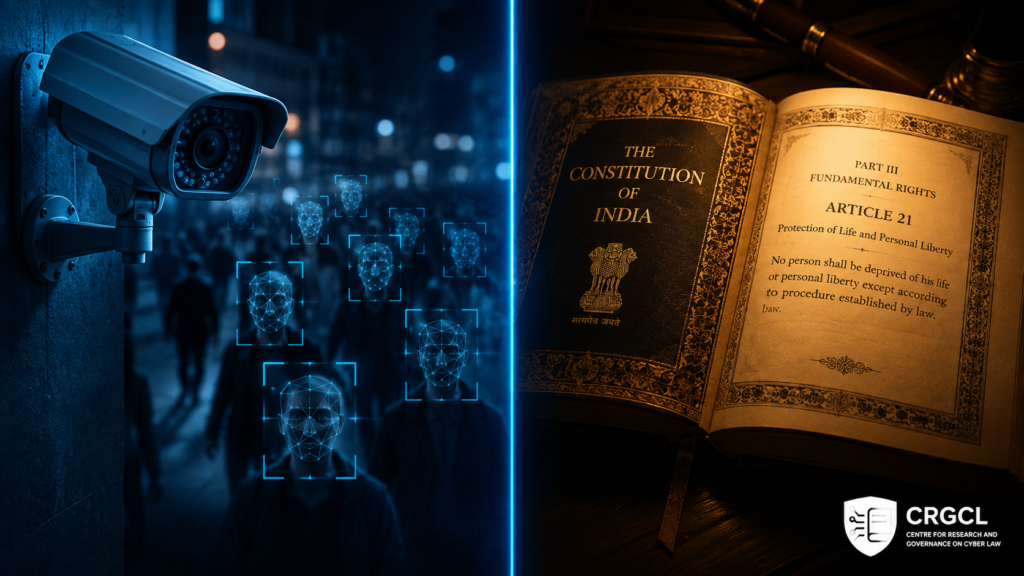
The cornerstone of employee privacy rights in India is Article 21 of the Constitution, which guarantees the Right to Life and Personal Liberty.
Landmark: Justice K.S. Puttaswamy v. Union of India (2017)
In this famous judgment, a nine-judge bench of the Supreme Court unanimously declared that privacy is a fundamental right protected under Article 21. The Court laid down three tests for any infringement of privacy:
- Legality: There must be a legal basis
- Legitimate Aim: It must serve a legitimate state or business interest
- Proportionality: It must not be excessive or disproportionate to the aim
While this case dealt primarily with government surveillance, its principles extend to private sector employment relationships.
What This Means for the Workplace:
-
- Employees have a reasonable expectation of privacy, even at work
-
- Any monitoring must be justified, necessary, and proportionate
-
- Blanket surveillance without justification is constitutionally suspect
2. Information Technology Act, 2000 & IT Rules, 2011
Until 2023, the IT Act was India’s primary data protection legislation.
Key Provisions:
-
- Section 43A: Imposes liability on corporate bodies that fail to protect sensitive personal data or information (SPDI). Organisations must pay compensation to affected individuals for negligent data handling.
-
- Section 72A: Penalises disclosure of personal information without consent or in breach of a lawful contract. Violation can result in:
-
- Imprisonment up to 3 years
-
- Fine up to ₹5 lakh
-
- Both
-
- Section 72A: Penalises disclosure of personal information without consent or in breach of a lawful contract. Violation can result in:
IT Rules, 2011 – Sensitive Personal Data or Information (SPDI) includes:
-
- Passwords
-
- Financial information
-
- Physical, physiological, and mental health conditions
-
- Sexual orientation
-
- Medical records and history
-
- Biometric information
Employee Rights Under IT Rules:
-
- Right to Access (Rule 5(6)): Employees can review their data and request corrections
-
- Right to Withdraw Consent (Rule 5(7)): Employees can withdraw consent at any time
-
- Security Obligations: Employers must implement ISO 27001 or government-approved security standards
3. Digital Personal Data Protection Act, 2023 (DPDP Act)
Enacted on August 11, 2023, the DPDP Act represents a paradigm shift in India’s data protection landscape. As of February 2026, the rules are being phased in.
Key Features for Employment Context:
A. Data Fiduciary Obligations
Employers (as “Data Fiduciaries”) must:
-
- Process data lawfully, fairly, and transparently
-
- Limit collection to necessary data only (data minimisation)
-
- Ensure accuracy of data used for decision-making
-
- Implement reasonable security safeguards
-
- Notify the Data Protection Board and affected employees of breaches
-
- Appoint a Data Protection Officer
-
- Erase data within one year of purpose completion or employee request (with 48-hour warning)
B. Legitimate Uses (Section 7)
Crucially, the DPDP Act allows employers to process employee data without explicit consent for:
✓ Prevention of corporate espionage
✓ Maintenance of confidentiality of trade secrets and IP
✓ Purposes of employment
✓ Provision of services/benefits sought by employees
✓ Compliance with court orders and legal obligations
✓ Medical emergencies
Important Limitation: This exemption does not apply to sensitive personal data of children or highly sensitive categories.
C. Employee Rights as Data Principals
-
- Right to access personal data
-
- Right to correction and erasure
-
- Right to nominate a representative
-
- Right to grievance redressal
D. Penalties
Non-compliance can result in penalties up to:
-
- ₹250 crore (approximately USD 30 million) for severe violations
-
- ₹200 crore for failure to notify data breaches
4. Telegraph Act, 1885 & Other Statutes
Sections 5: Allow interception and monitoring of electronic communications under specific, legally defined circumstances. However, these are generally limited to law enforcement contexts.
Important: Employers should not rely on these provisions for routine workplace monitoring without proper legal authorisation.
Employer Rights and Obligations
What Employers CAN Do
1. Monitor Company-Owned Systems
Legal Basis: Property rights, legitimate business interests
Employers have the right to monitor:
-
- Company email accounts
-
- Company-issued devices (laptops, phones, tablets)
-
- Activity on company networks
-
- Internet usage on company systems
Key Condition: Must be disclosed in employment agreements and IT policies.
2. Implement Email Policies
Organisations can establish rules governing:
-
- Acceptable use of company email
-
- Prohibition of personal use during work hours
-
- Ban on sending confidential information
-
- Social media conduct related to the company
3. Conduct Investigations
When there’s reasonable suspicion of:
-
- Data theft or breach
-
- Harassment
-
- Policy violations
-
- Fraud or criminal activity
Employers can access and review email communications.
4. Ensure Compliance and Security
Monitoring for:
-
- Regulatory compliance (e.g., PMLA for financial institutions)
-
- Cybersecurity threats
-
- Preventing corporate espionage
-
- Protecting intellectual property
What Employers MUST Do
1. Provide Clear Notice
Transparency is mandatory. Employers must inform employees about:
-
- What data is collected
-
- Purpose of collection
-
- How long will it be retained
-
- Who will have access
-
- Security measures are in place
Method: Through:
-
- Employment contracts
-
- Employee handbook
-
- IT Acceptable Use Policy
-
- Privacy notices
-
- Induction training
2. Obtain Consent (Where Required)
For data processing beyond “legitimate uses,” explicit written consent is necessary.
Standard of Consent (under DPDP Act):
-
- Free
-
- Specific
-
- Informed
-
- Unconditional
-
- Unambiguous
3. Implement Security Safeguards
Organisations must:
-
- Adopt ISO 27001 or equivalent standards
-
- Encrypt sensitive data
-
- Restrict access on a need-to-know basis
-
- Maintain audit trails
-
- Conduct regular security assessments
4. Limit Monitoring Scope
Monitoring must be:
-
- Necessary: Only for legitimate business purposes
-
- Proportionate: No broader than required
-
- Reasonable: Balancing business needs with privacy rights
Red Lines:  Cannot monitor personal email accounts without explicit consent Cannot access private communications on BYOD devices without consent Cannot conduct 24/7 surveillance without justification Cannot use monitoring data for purposes beyond stated intent
5. Establish Data Retention Limits
Under the DPDP Act, Data must be erased within one year of:
-
- Purpose fulfillment
-
- Employee request
-
- Termination of employment (unless other laws mandate retention)
Exception: Statutory requirements (e.g., labour law compliance) may mandate longer retention.
What Employers CANNOT Do
Monitor personal email without consent: Gmail, Yahoo, Outlook personal accounts are off-limits Access personal devices without consent: Employee-owned phones, laptops Disclose employee data without authorisation: To third parties, other employees Excessive monitoring: Keystroke logging without justification, continuous video surveillance Retaliation for exercising rights: Punishing employees for data access requests
Employee Rights and Protections
Your Core Rights
1. Right to Privacy
Under Article 21 and the Puttaswamy judgment:
-
- Reasonable expectation of privacy at work
-
- Personal communications remain protected
-
- Intrusive monitoring can be challenged
2. Right to Information
Under the DPDP Act, you can request:
-
- What personal data is held about you
-
- Purpose of data collection
-
- Who has access to your data
-
- Third-party data has been shared with
Employers must respond within prescribed timelines.
3. Right to Correction
If personal data is:
-
- Inaccurate
-
- Incomplete
-
- Outdated
You can request immediate correction.
4. Right to Erasure
You can request the deletion of personal data when:
-
- Purpose has been served
-
- Consent is withdrawn
-
- Data is no longer necessary
-
- Retention period has expired
Timeline: Employer must erase within a reasonable period (typically 48 hours under DPDP Rules).
5. Right to Withdraw Consent
If you provided consent for data processing, you can withdraw it at any time.
Consequence: Employer may refuse to provide the service/benefit for which data was needed.
6. Right to Grievance Redressal
-
- Internal grievance mechanism (required under DPDP Act)
-
- Data Protection Board of India
-
- Labor Commissioner
-
- Civil courts
Your Responsibilities
Employees must also:
-
- Comply with company IT policies
-
- Not impersonate others
-
- Not provide false information
-
- Use company resources appropriately
-
- Report security incidents
Case Law and Precedents
1. Justice K.S. Puttaswamy v. Union of India (2017) 10 SCC 1
Issue: Whether privacy is a fundamental right
Holding: Unanimously declared privacy as a fundamental right under Article 21.
Impact on Employment: Established that any infringement on employee privacy must pass the test of legality, legitimate aim, and proportionality.
2. Kharak Singh v. State of Uttar Pradesh, AIR 1963 SC 1295
Issue: Extent of privacy rights
Holding: Recognised that the right to privacy extends to both personal and professional spheres.
Impact: Early precedent recognising workplace privacy concerns.
3. People’s Union for Civil Liberties (PUCL) v. Union of India (1996)
Issue: Telephone tapping and surveillance
Holding: Emphasized need for safeguards against the misuse of surveillance.
Impact: Principles extend to workplace electronic monitoring—requires necessity, proportionality, and oversight.
4. Various Labour Court Decisions
Indian labour courts have consistently held:
-
- Monitoring must be disclosed in employment terms
-
- Excessive surveillance can constitute an unfair labour practice
-
- Personal data breaches can lead to compensation claims
-
- Termination based solely on email monitoring withouta proper procedure is illegal
Best Practices for Organisations
1. Develop Comprehensive Policies
The email and Communications Policy should cover:
-
- Clear ownership statement (company owns work email)
-
- Acceptable use guidelines
-
- Monitoring scope and methods
-
- Retention periods
-
- Consequences of violations
Privacy Policy should detail:
-
- Types of data collected
-
- Legal basis for processing
-
- Data subject rights
-
- Security measures
-
- Third-party sharing (if any)
-
- International transfers (if applicable)
2. Implement the “Transparency First” Approach
✓ Clearly communicate all monitoring practices
✓ Provide regular reminders (not just at onboarding)
✓ Make policies easily accessible
✓ Conduct awareness training
Sample Notice Language:
“All communications sent or received via company email systems are the property of [Company Name]. The company reserves the right to access, monitor, and review email communications for business purposes, including ensuring compliance with company policies, protecting company assets, and investigating misconduct. Personal use of company email should be minimal, and employees should have no expectation of privacy in company email communications.”
3. Principle of Proportionality
Before implementing any monitoring:
Ask:
-
- Is it necessary for a legitimate business purpose?
-
- Is there a less intrusive alternative?
-
- Is the scope limited to what’s needed?
-
- Are safeguards in place against misuse?
Example:
-
- ✓ Monitoring email metadata for security threats – Proportionate
-
- Reading every email without cause – Disproportionate
4. Technical Safeguards
Implement:
-
- Role-based access control: Only authorised personnel can access monitoring data
-
- Encryption: For data in transit and at rest
-
- Audit logs: Track who accessed what data when
-
- Automated alerts: For policy violations without manual review
-
- Anonymisation: Where possible, for analytics purposes
5. Consent Management
Create a robust consent framework:
-
- Use clear, plain language (avoid legalese)
-
- Separate consent for different purposes
-
- Make it easy to track and withdraw consent
-
- Maintain consent records
-
- Review and refresh consent periodically
6. Appoint a Data Protection Officer (DPO)
Required under the DPDP Act for certain organisations.
DPO Responsibilities:
-
- Oversee data protection strategy
-
- Monitor compliance
-
- Conduct training
-
- Serve as a point of contact for employees
-
- Liaise with the Data Protection Board
7. Regular Audits and Assessments
Quarterly:
-
- Review data access logs
-
- Check consent records
-
- Update employee listings
Annually:
-
- Comprehensive data protection audit
-
- Policy review and update
-
- Employee training refresh
-
- Vendor compliance check
8. Incident Response Plan
Establish clear procedures for:
-
- Detecting data breaches
-
- Containing breaches
-
- Assessing impact
-
- Notifying affected employees (within prescribed timelines)
-
- Reporting to the Data Protection Board
-
- Preventing recurrence
Timeline: Under the DPDP Act, breaches must be reported promptly (specific timelines in rules).
9. Vendor Management
For third-party service providers (payroll, HR systems, etc.):
-
- Conduct due diligence
-
- Ensure DPDP compliance
-
- Include data protection clauses in contracts
-
- Regular compliance checks
-
- Clear data processing agreements
10. Handling International Data Transfers
If transferring employee data outside India:
-
- Check if the destination country is restricted by a government notification
-
- Ensure adequate safeguards
-
- Update privacy notices
-
- Obtain specific consent if required
Best Practices for Employees
1. Understand Your Company Policy
✓ Read your employment contract carefully
✓ Review the IT Acceptable Use Policy
✓ Understand what’s monitored and why
✓ Know the escalation process
2. Maintain Digital Hygiene
Do:
-
- Use work email for work purposes primarily
-
- Keep personal communications on personal accounts
-
- Log out of personal accounts on work devices
-
- Use strong, unique passwords
-
- Report suspicious emails immediately
Don’t:
-
- Send confidential information to personal email
-
- Use work email for highly personal matters
-
- Share passwords or access credentials
-
- Download unauthorized software
-
- Click on suspicious links
3. Use Personal Devices Wisely
If your company has a BYOD (Bring Your Own Device) policy:
-
- Understand what can be monitored
-
- Keep work and personal data separate (use separate profiles if possible)
-
- Review MDM (Mobile Device Management) capabilities
-
- Know your employer’s remote wipe policies
4. Exercise Your Rights
Don’t hesitate to:
-
- Request access to your data
-
- Correct inaccurate information
-
- Ask questions about data usage
-
- Raise concerns about excessive monitoring
How: Contact your HR department or DPO.
5. Document Everything
If you believe your privacy rights have been violated:
-
- Keep copies of relevant communications
-
- Note dates, times, and witnesses
-
- Document your concerns in writing
-
- Preserve evidence (screenshots, emails)
6. Know When to Escalate
Seek legal advice if:
-
- Your personal email is accessed without consent
-
- You face retaliation for exercising data rights
-
- Monitoring appears excessive or discriminatory
-
- Your data has been breached and not properly handled
Resources:
-
- Data Protection Board of India
-
- Labour Commissioner offices
-
- Consumer forums (for compensation claims)
The Gray Areas
1. Social Media Monitoring
The Question: Can employers monitor employee social media?
Current State:
-
- ✓ Public posts: Generally permissible
-
- ✓ Company-managed accounts: Yes
-
- Private accounts without consent: No
-
 Off-duty conduct: Legally uncertain
Best Practice: Clear social media policy outlining boundaries.
2. BYOD and Personal Devices
The Question: What about work emails accessed on personal phones?
Current State:
-
- Work emails on personal devices: The employer can monitor the email content
-
- Other personal device data: Cannot access without explicit consent
-
- MDM software: The scope must be clearly defined and consented to
Best Practice: Containerization or separate work profiles.
3. Monitoring Outside Work Hours
The Question: Can employers monitor 24/7?
Current State:
-
- Legally unclear in India
-
- Likely to fail the proportionality test
-
- May constitute excessive surveillance
Best Practice: Limit monitoring to work hours unless a specific business justification exists.
4. Keystroke Logging and Screen Recording
The Question: Is this level of surveillance legal?
Current State:
-
- Legal if disclosed and consented to
-
- Must be proportionate to risk
-
- Continuous recording is likely excessive
Best Practice: Use for specific roles (e.g., handling sensitive data) with clear notice.
5. Exit Monitoring
The Question: Can employers monitor more intensively during the notice period?
Current State:
-
- Increased monitoring may be justified to protect IP
-
- Must still be proportionate
-
- Cannot be punitive
Best Practice: Clear off-boarding policy with defined monitoring scope.
Future Outlook
Emerging Trends
-
- Remote Work Challenges: As remote work proliferates, monitoring will extend to home networks and personal spaces, raising new privacy concerns.
-
- AI and Analytics: Employers increasingly use AI to analyse communications for sentiment, productivity, and compliance. Algorithmic monitoring will face scrutiny.
-
- Biometric Data: Use of biometrics for access control and time tracking will be more tightly regulated.
-
- Cross-Border Data Flows: With global teams, international data transfers will require more stringent compliance.
Pending Developments
DPDP Rules: Full implementation is phased. Watch for:
-
- Detailed consent mechanisms
-
- Breach notification timelines
-
- International transfer restrictions
-
- DPO qualifications
-
- Penalties guidelines
Data Protection Board: Once fully operational, it will issue:
-
- Guidance notes on workplace monitoring
-
- Sector-specific codes
-
- Precedential decisions
Jurisprudence: Expect more case law specifically addressing:
-
- Reasonable expectation of privacy at work
-
- Proportionality in monitoring
-
- Remedies for breaches
Preparing for Change
For Employers:
-
- Conduct privacy impact assessments
-
- Update policies to DPDP compliance
-
- Invest in privacy-enhancing technologies
-
- Train HR and IT teams
-
- Budget for compliance costs
For Employees:
-
- Stay informed of policy changes
-
- Participate in consultations
-
- Join industry forums
-
- Understand your evolving rights
Practical Checklist
For HR Teams
Immediate Actions (Next 30 Days):
-
- [ ] Review current email and monitoring policies
-
- [ ] Audit consent records
-
- [ ] Update employment contracts with data protection clauses
-
- [ ] Identify gaps in DPDP compliance
-
- [ ] Designate interim DPO
Short-Term (Next 90 Days):
-
- [ ] Develop or update:
-
- Privacy Policy
-
- Email & Communications Policy
-
- Data Retention Policy
-
- Incident Response Plan
-
- [ ] Develop or update:
-
- [ ] Conduct employee awareness training
-
- [ ] Implement technical safeguards
-
- [ ] Establish grievance mechanism
Medium-Term (Next 6 Months):
-
- [ ] Appoint permanent DPO
-
- [ ] Conduct a comprehensive data protection audit
-
- [ ] Review and update vendor agreements
-
- [ ] Create data processing inventory
-
- [ ] Implement consent management system
Long-Term (Next 12 Months):
-
- [ ] Achieve full DPDP compliance
-
- [ ] Obtain ISO 27001 certification
-
- [ ] Integrate privacy by design in all HR processes
-
- [ ] Regular compliance reviews
For Employees
Now:
-
- [ ] Read your employment contract
-
- [ ] Review company IT policy
-
- [ ] Separate work and personal email usage
-
- [ ] Enable two-factor authentication
-
- [ ] Update passwords
This Month:
-
- [ ] Request access to your personal data held by employer
-
- [ ] Review data for accuracy
-
- [ ] Understand monitoring scope
-
- [ ] Ask questions to HR/DPO if unclear
Ongoing:
-
- [ ] Maintain digital hygiene
-
- [ ] Stay updated on policy changes
-
- [ ] Document any concerns
-
- [ ] Exercise rights when needed
Conclusion
Email privacy at work in India is governed by a robust legal framework that seeks to balance employer interests with employee rights. The Puttaswamy judgment’s recognition of privacy as a fundamental right, combined with the DPDP Act’s comprehensive data protection regime, provides strong protections to employees while allowing employers to conduct necessary monitoring.
Key Takeaways:
For Employers:
-
- Transparency is non-negotiable
-
- Monitoring must be proportionate
-
- Consent and notice are critical
-
- Compliance is not optional—penalties are severe
For Employees:
-
- You have meaningful rights
-
- Company email is company property, but personal data is protected
-
- You can question, request, and challenge
-
- Document and escalate if rights are violated
For Both:
-
- Open dialogue reduces conflicts
-
- Clear policies benefit everyone
-
- Balance is achievable and necessary
-
- Privacy and productivity are not mutually exclusive
The landscape will continue to evolve as the Data Protection Board issues guidance and courts interpret the DPDP Act. Stay informed, stay compliant, and prioritise both security and dignity in the workplace.
Additional Resources
Government:
-
- Ministry of Electronics and Information Technology (MeitY): meity.gov.in
-
- Data Protection Board of India: (Website to be announced)
Legal Texts:
-
- Digital Personal Data Protection Act, 2023
-
- Information Technology Act, 2000
-
- Constitution of India (Article 21)
Industry Standards:
-
- ISO/IEC 27001 (Information Security Management)
-
- ISO/IEC 27701 (Privacy Information Management)
Support:
-
- National Consumer Helpline: 1800-11-4000
-
- Cyber Crime Reporting: cybercrime.gov.in
About CRGCL
CRGCL is committed to simplifying complex legal and regulatory topics for HR professionals and employees. This guide is for informational purposes only and does not constitute legal advice. For specific situations, please consult a qualified legal professional.
Share this guide:
[LinkedIn] [Twitter] [Email] [WhatsApp]
Was this helpful? Let us know what other workplace topics you’d like us to cover.